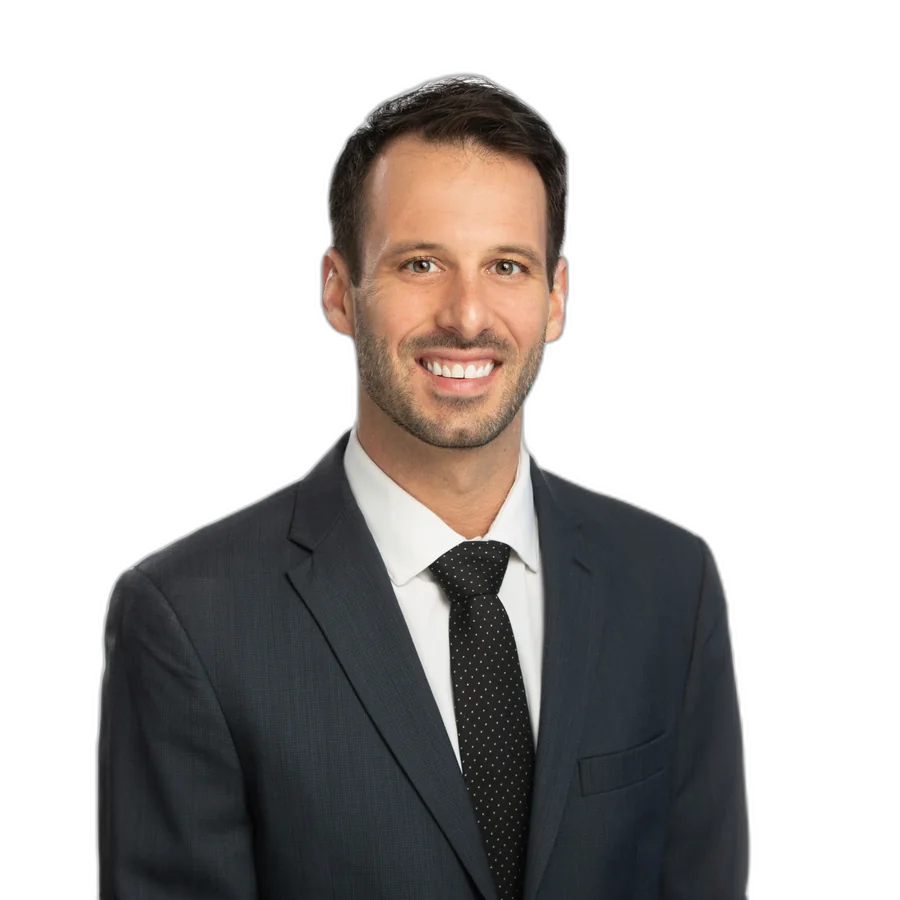
NMLS#: 2653540 (Company) · 513013 (Adam Styer)
Price Your DSCR Loan
A DSCR loan in Texas lets real estate investors buy rental property by focusing primarily on the property's rental income instead of the borrower's personal tax-return income. Adam Styer (NMLS #513013) closes DSCR loans in Austin and across Texas with program options that vary by credit, down payment, reserves, property type, and investor guidelines for single-family, short-term rentals, and LLC purchases.
A lesson from operating a short-term rental
Qualification is only one part of the decision
My wife and I personally manage Adobe Creek Ranch, an approximately 25-acre short-term rental near Fredericksburg with three living spaces, a pool, septic and propane systems. Operating it has meant learning about HVAC, pool equipment, roofs, plumbing, freeze damage, property-tax protests, agricultural exemptions, seasonality and guest operations.
The ranch has taught me that a property can qualify for a DSCR loan and still need more reserves than the underwriting model suggests. A realistic analysis should account for lower-demand periods, insurance and tax changes, major property systems, deferred maintenance and the possibility that projected revenue does not arrive on schedule.
That is why I prefer to stress-test the assumptions rather than treat the maximum projected revenue as the plan. Read more about my firsthand real estate experience.
What Is a DSCR Loan?
DSCR stands for Debt Service Coverage Ratio. It's a loan designed for investment property that skips your personal income entirely. Instead of reviewing W-2s, tax returns, or pay stubs, the lender evaluates whether the rental property itself generates enough income to cover the mortgage payment.
The math is simple:
DSCR = Gross Monthly Rent ÷ Monthly PITIA
PITIA = Principal + Interest + Taxes + Insurance + HOA (if applicable)
A DSCR of 1.0 means the rent covers the payment exactly. Most DSCR lenders want a ratio of 1.0 or above. Some will go as low as 0.75 for strong credit borrowers. Above 1.25 qualifies for the best pricing.
There's a legal reason this works. A DSCR loan finances a non-owner-occupied investment property, which makes it a business-purpose loan — generally outside the scope of the CFPB's consumer Ability-to-Repay rule under 12 CFR § 1026.43. That exemption is exactly why the lender can underwrite the property's rent instead of your personal income. It also means you carry the responsibility of making the deal pencil — the consumer ATR backstop isn't doing it for you.
This structure is why DSCR loans are the preferred tool for experienced real estate investors — especially those who are self-employed, carry significant depreciation on their rental schedule (IRS Schedule E), or are simply buying too many properties for traditional DTI to accommodate.
Who Are DSCR Loans Built For?
Self-Employed Investors
If your tax returns show heavy write-offs and depreciation, conventional investment loans often undercount your income. DSCR lenders don't care about your 1040 — they care about the rent check. Self-employed buyers frequently qualify for larger loan amounts via DSCR than they would through traditional programs.
High-DTI Borrowers
Bought several properties already? Traditional lenders stack all your mortgages against your personal income and hit a DTI ceiling. DSCR loans don't count against your personal DTI — each deal stands on its own rental income. Scale without the ceiling.
Portfolio Builders
If your strategy involves buying 5, 10, or 20 doors over the next few years, DSCR is how you do it. No re-qualifying on personal income every time. Each property gets its own loan, underwritten on its own cash flow.
Out-of-State Investors
Austin's rental market attracts investors from California, New York, and beyond who want exposure to Texas real estate. DSCR loans don't require you to be local — they're structured entirely around the Austin property's performance.
What Are the DSCR Loan Requirements in Texas?
Requirements vary by lender — this is where having a broker who works with 40+ wholesale lenders matters. General baseline requirements:
Credit Score
Minimum 680 credit score for most DSCR programs. Credit scores of 720+ unlock significantly better rates and lower reserve requirements. At 760+, you'll see the most competitive DSCR pricing in the market.
Down Payment
Typically 20–25% down for single-family and 2–4 unit properties. Some programs allow 15% down with strong credit and DSCR above 1.25. Multi-family (5+ units) and short-term rental properties may require 25–30%.
DSCR Ratio
Most programs require DSCR of 0.75 minimum. 1.0+ is standard. 1.25+ typically qualifies for lowest rates. DSCR is calculated using current market rent (from an appraiser's Form 1007) or a signed lease agreement.
Property Type
Single-family homes, condos (non-warrantable acceptable with some lenders), 2–4 unit properties, and short-term rentals. Must be non-owner occupied investment property. No primary residences or second homes.
Reserves
Typically 6–12 months of PITIA in reserves post-close, depending on credit score and DSCR. Reserves can be in checking, savings, retirement accounts, or investment accounts. They're verified — not spent at closing.
Documents Required
Personal W-2 and tax-return income may not need to be the primary qualifying path. You will still need file documentation, including: government ID, bank statements for down payment/reserves, a lease or market rent appraisal (Form 1007), and entity documents if buying through an LLC.
Why Is Austin TX a Strong DSCR Investment Market?
DSCR loans work best in markets with strong, predictable rental demand. Austin checks every box.
Rental demand fundamentals: Austin's population has grown faster than its housing supply for years. The UT Austin student population (50,000+), the tech workforce (Apple, Tesla, Oracle, Google, Samsung all have significant Austin operations), and the ongoing in-migration from California and Northeast states all drive persistent rental demand that keeps vacancy rates low.
Inventory to buy into: The Austin–Round Rock–San Marcos metro recorded a $440,000 median home price, 11,592 active listings, 2,648 closed sales, and 4.7 months of inventory in April 2026, according to Unlock MLS. Closed sales rose 2.0% year over year while the median price fell 1.9%.
Short-term rental opportunity: Austin's tourism industry — South by Southwest, Austin City Limits Music Festival, Formula 1 at Circuit of the Americas, the constant flow of bachelorette and bachelor groups downtown — creates a strong short-term rental market. Properties near 6th Street, Rainey Street, the Domain, and South Congress can generate substantially above-market income as Airbnb/VRBO listings. Many DSCR lenders now underwrite using short-term rental income projections from AirDNA reports.
Suburban rental growth: Round Rock, Cedar Park, Pflugerville, and Leander all have strong rental markets driven by workforce relocation and families who aren't ready to buy. DSCR investors are increasingly targeting these suburban markets where purchase prices are lower and DSCR ratios often pencil out better than in core Austin neighborhoods.
Appreciation story: While DSCR is primarily a cash flow loan, Austin's long-term appreciation history is a meaningful secondary benefit for investors building equity over a 5–10 year hold.
What Do DSCR Investment Property Returns Look Like in Austin TX?
Here's the honest math on three common Austin investment property scenarios using DSCR financing in 2026. These use a 7.375% DSCR rate (representative, not guaranteed), 25% down, and current Austin-area rent estimates. Your actual numbers will vary.
Where does 7.375% come from? The 30-year conforming benchmark per Freddie Mac's Primary Mortgage Market Survey was 6.37% the week of May 7, 2026. DSCR pricing typically runs 0.75–1.5% above that owner-occupied benchmark, which lands the representative DSCR rate in the low-to-mid 7s. The exact number on your deal moves with your credit, DSCR ratio, and down payment — this is a planning figure, not a quote.
Scenario 1: Core Austin Single-Family (Long-Term Rental)
The deal: $480,000 SFR in East Austin or 78704/78745 zip codes. 25% down ($120,000), loan of $360,000.
- Monthly PITIA: ~$3,650 (P&I: $2,490 + taxes: $930 + insurance: $230)
- Market rent: $2,700–$2,900/mo (long-term rental, 2026 Austin data)
- DSCR ratio: ~0.78 — this is a below-1.0 DSCR deal. Requires a lender that allows 0.75 DSCR, typically at a pricing premium.
- Cash flow: Negative $700–$900/mo before vacancy and maintenance
Bottom line: Core Austin single-family properties rarely pencil on cash flow in 2026. Investors buying here are betting on appreciation and long-term equity — not immediate income. This is not a bad bet (Austin's appreciation history is strong), but you need reserves to absorb the monthly deficit. DSCR financing is still viable if you find a lender comfortable with sub-1.0 ratios.
Scenario 2: Suburban Austin Single-Family (Long-Term Rental)
The deal: $340,000 SFR in Pflugerville, Round Rock, or Hutto. 25% down ($85,000), loan of $255,000.
- Monthly PITIA: ~$2,280 (P&I: $1,760 + taxes: $380 + insurance: $140)
- Market rent: $2,300–$2,500/mo
- DSCR ratio: 1.01–1.10 — passes most DSCR lenders
- Cash flow: +$20–$220/mo before vacancy (~5–8%) and maintenance (~1% annually)
- After reserves: Near breakeven to slight positive
Bottom line: Suburban Austin is where DSCR investors find their best ratios in the current market. The math is thin — you won't retire on one Round Rock rental — but the deal qualifies cleanly, builds equity, and won't drain your bank account month to month. This is the highest-volume DSCR scenario in the Austin metro right now.
Scenario 3: Short-Term Rental (STR) Near Austin Attractions
The deal: $510,000 property near South Congress, the Domain, or within 15 miles of COTA (Circuit of the Americas). 25% down ($127,500), loan of $382,500.
- Monthly PITIA: ~$3,700
- AirDNA projected gross revenue: $5,200–$6,500/mo (at 78–82% occupancy)
- DSCR calculation: Most DSCR lenders use 75% of AirDNA projected income: $3,900–$4,875/mo
- DSCR ratio: 1.05–1.32 — strong approval profile
- Net cash flow: $800–$2,000/mo after platform fees and management (before maintenance)
Bottom line: Austin's STR market is the strongest use case for DSCR financing in this city. Events like SXSW, ACL, F1, and constant bachelorette/bachelor group travel create reliable above-market revenue potential. The underwriting risk: STR income is less stable than long-term rent. You'll need 6+ months of reserves and a realistic occupancy assumption. Do not underwrite at maximum projected revenue — underwrite at 70–75% and see if it still works. Read our full DSCR guide →
Want Adam to run the numbers on a specific Austin property? Submit it here or book a 15-minute call.
DSCR Across Central Texas Sub-Markets
Central Texas isn't one investor market — it's five, each with different DSCR underwriting realities:
- Core Austin and inner-loop neighborhoods — long-term rentals and downtown condos. HOA rules, condo warrantability, and appraisal rent schedules drive DSCR outcomes here more than purchase price.
- Round Rock, Pflugerville, Georgetown — suburban single-family rentals. The dominant Central Texas DSCR file: $400K–$650K SFRs, long-term leases, predictable DSCR math. Williamson County tax rates run lower than Travis County, which improves payment ratios.
- San Marcos and Kyle — student-adjacent rentals near Texas State University. Mid-term and long-term rental strategies both work; market-rent schedules and lease-up timing matter for DSCR underwriting.
- New Braunfels and Comal County — lifestyle properties for short-term vacation rentals, Schlitterbahn proximity, and Gruene historic district. STR licensing varies by jurisdiction.
- Hill Country (Dripping Springs, Wimberley, Fredericksburg, Spicewood) — STR-heavy, often near wineries, wedding venues, or rivers. AirDNA projections and seasonality patterns drive DSCR qualifying. See the Dripping Springs DSCR guide and Fredericksburg wine country DSCR guide for niche-specific underwriting.
A property in Round Rock doesn't underwrite the same way as a Wimberley STR or a downtown Austin condo. HOA rules, STR licensing, appraisal rent schedules, flood zones, and insurance all change the deal. The review starts with the property, not the borrower's tax return.
DSCR vs. Conventional Investment Loan: Which Is Right for You?
| Factor | DSCR Loan | Conventional Investment |
|---|---|---|
| Income verification | Property rental income only | W-2s, tax returns, paystubs |
| DTI calculation | Not calculated — no personal DTI | All debts counted against income |
| Scalability | Each property stands alone | DTI ceiling limits # of properties |
| Self-employed friendliness | Ideal — write-offs don't matter | Write-offs reduce qualifying income |
| Rate vs. conventional | Typically 0.75–1.5% higher | Lower rate, more paperwork |
| Closing speed | Often more documentation-specific; timeline depends on program, property, appraisal, title, and investor review | Timeline depends on appraisal, title, and full income underwriting |
One thing to keep in mind: conventional investment-property loans carry their own pricing penalty. Fannie Mae's loan-level price adjustments (LLPAs) add cost specifically for non-owner-occupied properties — a meaningful add-on baked into the rate before you ever compare it to DSCR. That narrows the gap between conventional and DSCR more than most investors expect when they assume conventional is automatically cheaper.
The right answer depends on your situation. If you're a W-2 buyer purchasing your first or second investment property with clean tax returns, conventional may save you money on rate. If you're self-employed, have 5+ properties, or want to scale quickly without hitting personal DTI limits — DSCR is the tool.
Can You Buy Investment Property Through an LLC with a DSCR Loan?
DSCR loans are one of the few mortgage products that allow title to be held in an LLC. This is a major advantage for investors who want to separate their personal assets from their rental portfolio for liability protection.
Requirements for LLC purchase typically include: the LLC must be formed in Texas (or registered as a foreign LLC), the borrower must personally guarantee the loan, and standard LLC documentation (articles of organization, operating agreement, EIN) will be requested by the lender.
Not every DSCR lender handles LLC vesting the same way. As a broker, I match your scenario to the lender whose guidelines fit it best — not the other way around.
DSCR Loan FAQ — Austin TX
A DSCR loan qualifies you based on the property's rental income rather than your personal W-2s or tax returns. The ratio is Gross Monthly Rent ÷ Monthly PITIA (principal, interest, taxes, insurance, HOA). A DSCR of 1.0 means rent covers the payment exactly. Most lenders require 1.0 or higher, though some will go to 0.75 with strong credit. Personal employment verification, tax returns, and paystubs may not be required on some DSCR programs.
Typical requirements: minimum 680 credit score (720+ for better pricing), 20–25% down payment, DSCR of 0.75–1.0 minimum depending on lender, non-owner occupied investment property, and a current lease or market rent appraisal (Form 1007). Personal W-2 income, tax-return income, and employment verification may not be required on some DSCR programs. Reserves of 6–12 months PITIA are typically required post-close.
Yes — many DSCR lenders now accept short-term rental income. For Airbnb/VRBO properties, lenders typically use an AirDNA or similar market report, or a 12-month actual income history. Austin's STR market is active near downtown, East Austin, and the lake areas. Note: Austin requires a short-term rental permit — have yours in hand before we structure the loan. Some lenders require the permit to close.
DSCR loans are often ideal for self-employed investors. Traditional investment loans require 2 years of tax returns and penalize write-offs by reducing qualifying income. DSCR loans don't look at personal income at all — they evaluate rental property cash flow. If your tax returns show significant depreciation or business deductions, DSCR often approves you at a higher loan amount than conventional investment financing would allow.
DSCR rates typically run 0.75–1.5% above conventional owner-occupied rates. Exact pricing depends on your credit score, DSCR ratio, down payment, and the specific lender. As an independent broker with access to 40+ wholesale DSCR lenders, I shop your deal across multiple investors to find the most competitive rate and terms for your specific property. Call or apply to get current pricing for your scenario.
No — DSCR loans require non-owner occupied investment property. If you're living in the home (even part-time), it doesn't qualify. House hacking scenarios work better with FHA financing (2–4 units, owner-occupied, 3.5% down) or conventional loans if you have the credit and down payment. I'll help you identify which program fits your actual living situation.
Quick Answers About DSCR Loans in Austin
What is a DSCR loan?
A DSCR loan is an investor mortgage that primarily reviews whether the rental property's income can cover the property's payment. The borrower's personal tax-return income is usually not the main qualifying factor.
When is DSCR better than conventional investor financing?
DSCR can be better when the borrower has strong assets or rental strategy but conventional debt-to-income rules block the file. Conventional investor financing may be better when personal income is easy to document and the borrower wants lower agency pricing.
What matters most for an Austin DSCR approval?
The most important factors are rent, PITIA, property taxes, insurance, down payment, credit, reserves, property type, and whether the property is a long-term rental or short-term rental. Austin-area taxes and insurance can materially change the DSCR ratio.
Can an Austin DSCR loan close in an LLC?
Many DSCR programs allow LLC vesting for investment properties, usually with a personal guaranty. The LLC, property, title, insurance, and operating agreement need to fit the lender's requirements.
Reviewed by Adam Styer, NMLS #513013. Adam is licensed in Texas through Kyber Mortgage Corporation dba HyperSmart Home Loans, NMLS #2653540. This page is educational and is not a commitment to lend.
★★★★★
"Adam closed my DSCR loan in 22 days. I'm self-employed with aggressive depreciation on my returns — no other lender could make it work. He found a program that qualified on the rent alone."
Read More ReviewsWhat Other Investment Property Financing Options Are Available?
DSCR isn't the only option for Austin real estate investors. Depending on your situation, conventional investment loans, hard money bridges, or construction financing may be a better fit. I cover all of them.
View all investment property loan programs →
New to investment property financing? Send the short version first so we can map what you can access today: Send your investor scenario →
Unfamiliar with terms like DSCR, LTV, or debt-to-income ratio? Mortgage Glossary →
What Non-QM Loan Options Are Available in Texas Besides DSCR?
DSCR is the most popular Non-QM loan for investors — but it's not the only one. If your income situation doesn't fit a W-2, there are two other programs worth knowing: bank statement loans and asset depletion loans. Both are Non-QM, meaning they use alternative income documentation instead of tax returns.
Bank Statement Loans — Qualify on Deposits, Not Tax Returns
Bank statement loans are designed for self-employed borrowers whose tax returns understate their actual income. Most lenders use 12 or 24 months of personal or business bank statements to calculate average monthly income — write-offs don't count against you here.
| Detail | Typical Requirement |
|---|---|
| Income documentation | 12–24 months personal or business bank statements |
| Expense factor | 50% of business deposits counted as income (varies by lender) |
| Minimum credit score | 620–640 |
| Down payment | 10–20% depending on loan amount and credit |
| Best for | Self-employed owners, contractors, consultants, freelancers |
The catch: rates are higher than conventional by 0.5–1.5%, and the qualifying math depends on how your deposits are structured. A business account with high volume but lots of pass-through expenses may qualify for less than you expect.
Asset Depletion Loans — Use Your Savings to Qualify
Asset depletion (also called asset dissipation) lets borrowers with significant liquid assets qualify without traditional income. The lender divides your eligible assets by the loan term to calculate a monthly "income" — your investment accounts, savings, and retirement funds effectively stand in for a paycheck.
| Detail | Typical Requirement |
|---|---|
| Eligible assets | Checking, savings, brokerage, retirement (typically 70% of retirement) |
| Income calculation | Total assets ÷ loan term in months = monthly qualifying income |
| Minimum credit score | 680+ |
| Best for | Retirees, high-net-worth individuals, career-transitioners |
| Example | $1.5M in assets ÷ 360 months = $4,167/mo qualifying income |
This is a niche product — only a small number of wholesale lenders in Texas offer it. If this describes your situation, reach out directly and I'll match you to the right program.
Not sure which Non-QM loan fits your situation? Send your scenario and we'll map your income profile to the right program — DSCR, bank statement, or asset depletion.
Related Complex-Income Pages
- Non-QM Loans (Hub) — overview of every alternative-doc program Adam originates
- DSCR Loans Texas — statewide DSCR landing for out-of-state investors buying TX rentals
- DSCR Loans Fredericksburg, TX — Hill Country STR investors
- DSCR Loans Dripping Springs — wedding-venue and STR buyers
- Investor Loans — full investor-mortgage cluster (DSCR, portfolio, fix-and-flip)
- Bank Statement Loans — for self-employed borrowers
- K-1 Income Mortgage — Austin — partnership and S-corp distributions, common for investors holding property in pass-through entities
- Mortgage for Business Owners — Austin — financing for LLC and S-corp owners buying a primary residence alongside their rental portfolio
- High-Net-Worth / Asset Depletion Mortgages
Run Your DSCR Scenario
Tell me the property address, estimated rent, purchase price, and rough down payment. I will check the DSCR path before asking you to complete a full application.
Run My DSCR Scenario Run the Numbers →Talk soon — Adam Styer. Or call (512) 956-6010 — NMLS #513013